


Majhola, Khatima, U.S. Nagar, Uttarakhand, India
Call: +91-9760509709, 9410762408
Email: contact@skpublicschool.com

S.K. Public School, Majhola, Uttarakhand, India
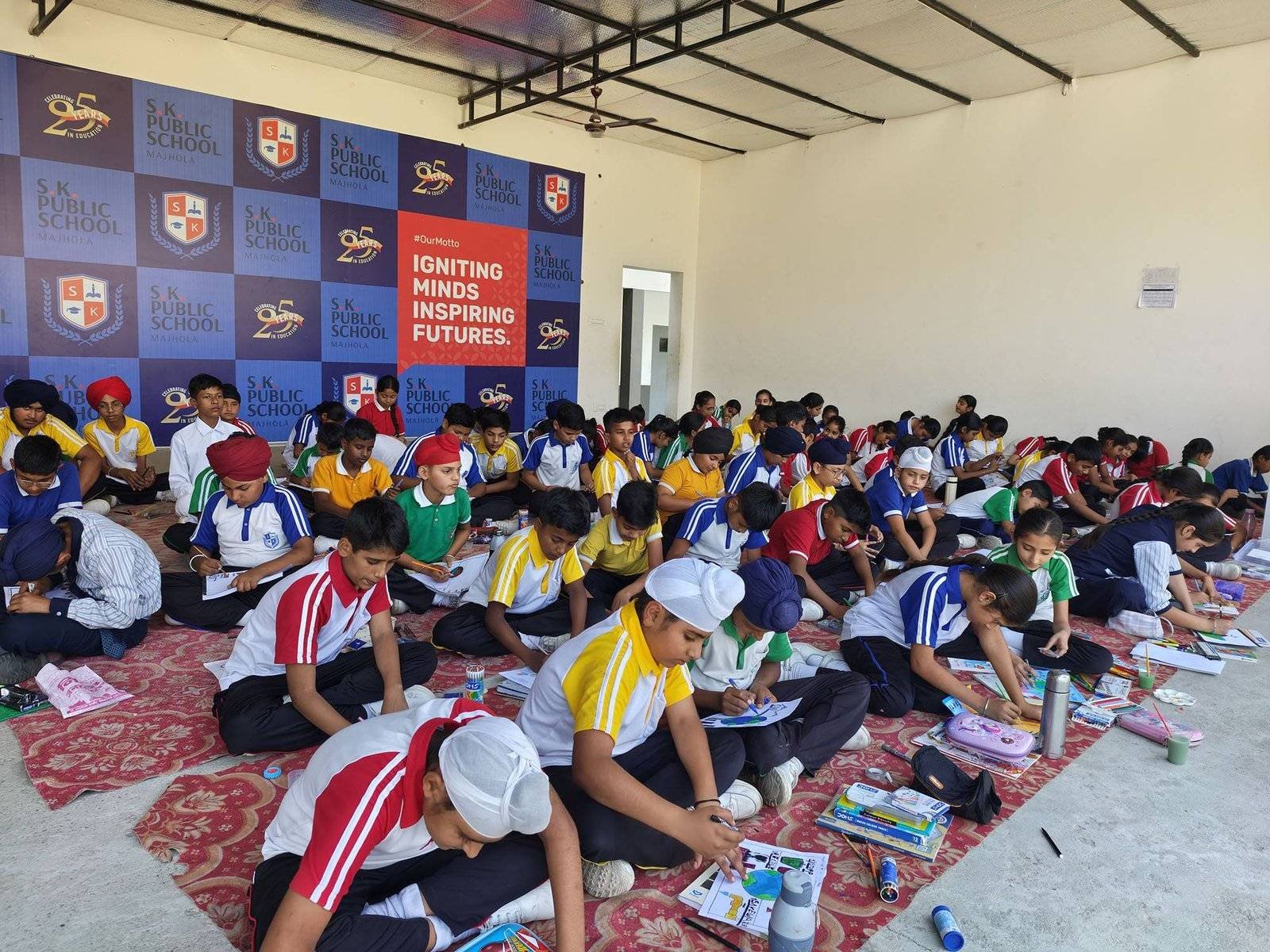
A child can know every answer and still freeze when asked to say it aloud. Confidence in communication does not come from memorising facts. It comes from repeated, safe opportunities to express ideas, make mistakes, and try again. The creative arts give children exactly that.
When a child picks up a brush or a lump of clay, she is making decisions: which colour, which shape, what to show and what to leave out. Every finished drawing is an idea shared with the world.
Singing in a chorus or playing an instrument in a group teaches lessons that no worksheet can.
Perhaps no activity builds communication skills as directly as drama. On stage, children must speak clearly, use expressions and gestures, remember their lines, and respond to fellow actors in the moment.
The benefits of the arts do not stay in the art room or the auditorium. Teachers consistently notice that children involved in creative activities:
Participate more actively in class discussions
Show better memory and concentration
Handle stage fright and exam anxiety more calmly
Collaborate better with classmates
Develop stronger vocabulary and storytelling ability
A child who has learned to hold an audience’s attention in a school play will find it far easier to give a presentation, face an interview, or lead a team years later.
We see the arts as an essential part of learning, never an “extra.” Through regular art and craft sessions, music practice, drama activities, cultural programmes, and celebrations of festivals and national days, we ensure every child gets a stage, whether they are a natural performer or a quiet observer discovering their voice. We do not judge children by talent. We celebrate effort, courage, and growth. A hesitant first step on stage is applauded as loudly as a flawless performance.
The world our children will enter values people who can think creatively, express themselves clearly, and work well with others. Art, music, and drama nurture all three. At S.K. Public School, Majhola, we are committed to giving every child the colours, the melodies, and the stage to discover that their voice is worth hearing.
Because when a child learns to express, she learns to lead.
Want to see creativity in action? Visit S.K. Public School, Majhola, and watch our students bring ideas to life.


